Welcome to Grand China Lucas! | may.zhang@gclpet.com
English
- All
- Product Name
- Product Keyword
- Product Model
- Product Summary
- Product Description
- Multi Field Search

Views: 0 Author: Site Editor Publish Time: 2025-12-16 Origin: Site


Every dog owner knows the specific guilt of ignoring pleading eyes at the dinner table. You want to express affection through food, yet you fear contributing to obesity or long-term health issues. This creates a difficult emotional conflict between bonding with your pet and practicing responsible care. Scientifically, "too many" is not defined by a simple count of cookies in the jar. It is strictly a mathematical percentage of daily caloric intake balanced against nutrient density.
This article moves beyond generic feeding advice to provide a precision-based framework. You will learn to calculate exact calorie limits and recognize subtle behavioral red flags like "bribery loops." We also compare different reward categories, helping you choose between high-volume options and nutrient-dense Pure Meat Air Dried Treats. The goal is simple: maximize the reward value while minimizing the physical risk.
The 10% Golden Rule: Treats should never exceed 10% of daily caloric intake (5% for overweight dogs).
The Subtraction Method: Treat calories must be subtracted from meal calories, not added on top.
Quality over Quantity: Nutrient-dense Pure Meat Air Dried Treats offer higher engagement with lower volume than filler-heavy biscuits.
Behavioral Red Flags: If a dog refuses commands without food, you are bribing, not treating.
Most pet owners guess their dog's limit based on size, but metabolism requires precision. Veterinary nutritionists have established clear guidelines to prevent the gradual creep of weight gain.
The industry standard for a healthy, active dog is the 10% rule. This means treats should comprise no more than 10% of their total daily caloric intake. However, this number shifts dramatically for dogs who are sedentary, senior, or already overweight. In these cases, the limit drops to 5%.
Vague measurements like "one biscuit" are dangerous because they lack context. A large milk-bone style biscuit might contain 100 calories. For a Golden Retriever, that is a snack. For a small terrier requiring only 400 calories a day, that single biscuit represents 25% of their daily energy needs. This is the equivalent of a human eating a double cheeseburger as a mid-afternoon snack. It disrupts the nutritional balance significantly.
A common mistake is treating rewards as "extra" credit added to a full day of meals. Biologically, treats are a currency exchange. Every calorie given by hand must be removed from the bowl.
If your dog requires 500 calories per day to maintain weight, and you plan a training session using 50 calories worth of dog treats, their dinner must be reduced to 450 calories. Failing to subtract these calories creates a surplus. Over a year, a daily surplus of just 30 calories can lead to several pounds of weight gain, which is devastating for joint health.
Scales tell you weight, but they do not tell you composition. To determine if your current treating habits are excessive, use the Body Condition Score (BCS) hands-on test:
Rib Check: Run your hands along your dog’s ribcage. You should feel the ribs easily with light pressure, similar to the back of your hand. If you have to press hard to find them, they are covered in excess fat.
Waistline Observation: Look at your dog from above. There should be a visible hourglass taper after the ribs. If the body is tube-shaped or bulging, calorie intake is too high.
Weight gain is a lagging indicator. It takes months to show up. Behavioral and digestive signs, however, often appear much sooner when treat volume is too high.
There is a critical distinction between a reward and a bribe. A reward is payment for work already completed. A bribe is an item shown to the dog to lure them into compliance.
If your dog knows a command like "Sit" or "Stay" but refuses to perform it until they see the bag in your hand, you are over-treating. You have inadvertently taught them that obedience is optional and contingent on visible food. This erodes authority and indicates the treat frequency is effectively managing you, rather than you managing the dog.
Treats often contain different ingredients than the dog's main diet. When fed in excess, these ingredients disrupt the gut microbiome.
Stool Quality: Soft stools, mucus, or urgent bowel movements often suggest high fat content or filler intolerance. Many cheaper commercial options, specifically generic Extruded Pet Treats, use glycerin or grain fillers to maintain texture. In large quantities, these additives can cause osmotic diarrhea, pulling water into the intestines.
This is often misdiagnosed as the dog being a "picky eater." The dog refuses their nutrient-complete kibble in the morning. A worried owner then offers high-value treats to ensure the dog eats something.
The dog learns that refusing healthy food results in receiving tastier, unbalanced food. This displacement leads to long-term vitamin and mineral deficiencies because treats rarely meet AAFCO standards for a complete diet.
Dogs are opportunistic. If begging works once, they will try it again. Over-treating shifts the psychological dynamic from "earning" to "demanding." If your dog paws at you, barks at the cupboard, or nudges your hand constantly, they have been conditioned to expect free food. This is a sign that the boundaries around resource delivery have collapsed.
Suddenly snapping or growling when you approach them while they are eating a chew is a serious red flag. It can indicate that the item is of such high value (or given so rarely) that it triggers anxiety. Conversely, over-treating with high-value bones without proper training can increase possession aggression.
Not all calories are created equal. A 20-calorie chew that lasts 10 minutes offers more value than a 20-calorie biscuit gone in two seconds. Use this framework to audit your pantry.
| Category | Primary Pros | Primary Cons | Best Use Case |
|---|---|---|---|
| Extruded Treats (Biscuits) | Inexpensive, shelf-stable, crunchy texture. | High carbs, fillers, low engagement time. | Occasional low-value reward. |
| Wrapped Treats | Longer chew time, mental stimulation. | Hidden calories in core, recall risks. | Weekly special chew. |
| Air Dried / Freeze Dried | Single ingredient, high aroma, nutrient-dense. | Higher cost per ounce. | Training & High Distraction. |
| Fresh Vegetables | High volume, very low calorie. | Lower palatability for some dogs. | "Filler" treating for volume. |
These are the standard cookies found in grocery stores. They are convenient and cheap. However, they are often packed with wheat, corn, or soy fillers to bind the ingredients together. The nutritional ROI (Return on Investment) is low. They provide empty calories similar to human crackers. While acceptable sparingly, they should not form the bulk of a training diet due to the risk of carbohydrate-driven weight gain.
These treats typically feature a protein strip wrapped around a core, such as rawhide, starch, or a biscuit. Wrapped Pet Treats offer the benefit of duration; the dog has to work to unravel and chew them, providing mental stimulation. The downside is the caloric density of the core, which owners often overlook. Quality control is vital here, as low-quality versions often suffer from sourcing issues. Treat these as a "once a week" event rather than a daily reward.
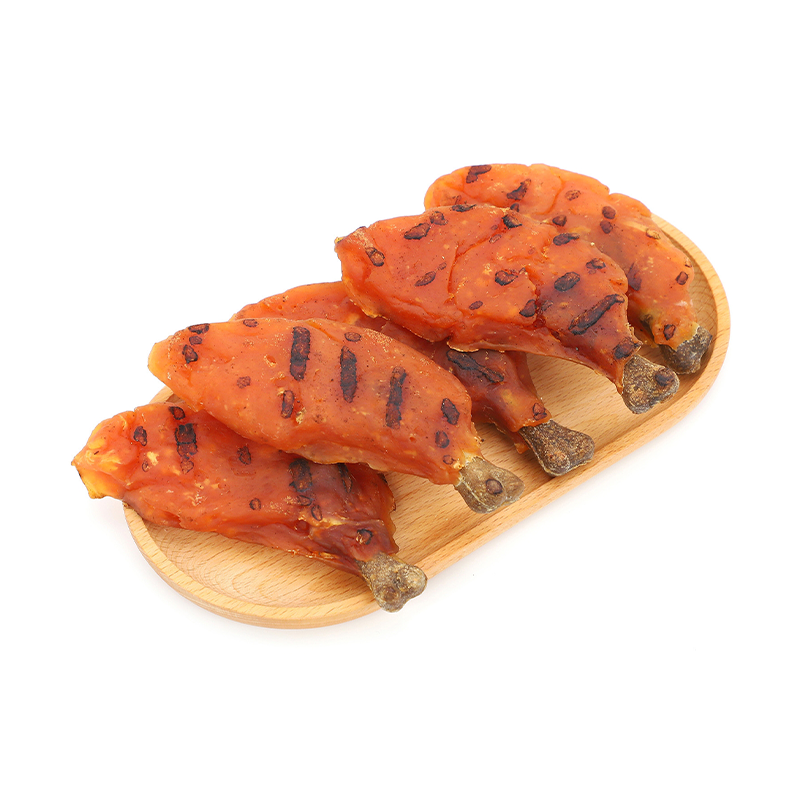
These are the gold standard for training. Because they are single-ingredient meats dried gently, they retain a potent scent profile that captures a dog's attention even in busy environments. While the price point per ounce is higher, the density allows you to break a single piece into tiny micro-morsels. You can deliver 50 rewards using air-dried liver for the same calorie count as one medium biscuit, making them the most efficient tool for behavior modification.
When your dog simply wants the action of eating rather than a high-value reward, vegetables are excellent. Green beans, carrots, and cucumbers provide a satisfying crunch. They add volume to the stomach without adding significant calories, making them perfect for owners who love to treat frequently but have overweight dogs.
You do not have to stop treating to keep your dog healthy. You simply need to change the mechanics of delivery.
Canine behavioral science suggests that dogs count the frequency of rewards, not the size. A dog feels more rewarded receiving five tiny crumbs one after another than receiving one large chunk.
Adopt the "micro-dosing" tactic. Take a single strip of jerky and use kitchen shears to cut it into 20 pieces no larger than a pea. This allows you to click-and-treat 20 times during a walk while only feeding a minimal amount of food. It maximizes the training reps per calorie.
Do not use your best currency for easy work. Establish a hierarchy of rewards based on distraction levels:
Low Distraction (Living Room): Use kibble from their daily meal allowance or vegetables. The environment is boring, so the food doesn't need to be exciting.
High Distraction (Vet/Park): Reserve high-potency items like air-dried organ meats for these moments. If you use high-value treats at home, you have no leverage left when you face real-world distractions.
Sometimes you want to tell your dog they did something amazing, like coming back when called at the park. Instead of giving one giant treat, use the Jackpot method. Feed 5 to 10 tiny micro-pieces rapidly, one after the other. This extends the duration of the reward event and creates a massive dopamine response, yet the total caloric load remains small.
Willpower fails when the bag is open. In the morning, measure out the dog's 10% allowance and put it in a specific "daily jar." All family members must pull from this jar. When the jar is empty, treating stops for the day. This simple physical constraint prevents accidental overfeeding by multiple family members.
The consequences of exceeding the limit extend far beyond a thicker waistline. It systematically affects organ function and longevity.
Obesity is the most common nutritional disease in dogs. Data shows that being even moderately overweight can reduce a dog's lifespan by up to two years. Excess weight places mechanical stress on joints, exacerbating arthritis and increasing the likelihood of cranial cruciate ligament (CCL) tears.
This is a painful and potentially life-threatening inflammation of the pancreas. It is frequently triggered by a sudden intake of high-fat foods. Feeding table scraps, fatty meats, or rich, greasy treats can overload the pancreas. Smaller breeds like Schnauzers and Yorkies are particularly susceptible.
Commercial dog food is formulated to be complete and balanced. Treats are not. When treats exceed 10% of the diet, they dilute the essential vitamins, minerals, and amino acids provided by the main meal. Over time, this dilution can lead to sub-clinical deficiencies that affect coat quality, immune system function, and energy levels.
Treating is a fundamental tool for bonding and communication, not just a way to feed your pet. The solution to "too many treats" is not to stop showing love, but to modernize how you deliver it. Success lies in the type of treat—opting for single-ingredient, air-dried options—and the mechanics of delivery, such as micro-dosing.
The final verdict is clear: calories from rewards must be subtracted, not added. By respecting the 10% rule and choosing nutrient-dense options, you protect your dog’s health without sacrificing your relationship. Check your treat labels today, calculate your dog's specific limit, and switch to high-value, lower-volume rewards to ensure many healthy years together.
A: Yes, but you must be strict. Limit treats to non-starchy vegetables like green beans or cucumbers. If you use meat-based rewards for training, stick to a 5% caloric limit using single-ingredient protein sources. Always subtract these calories from their main meal to ensure a calorie deficit for weight loss.
A: Puppies need soft, small, nutrient-dense options. Air-dried liver or lung is excellent because it is rich in nutrients and easy to break into tiny pieces. Avoid hard biscuits that can cause choking or products with heavy fillers that might upset a developing digestive system.
A: You must break the conditioning loop. Ignore the behavior completely—no eye contact, no touching, and no scolding. Never feed the dog from the table or while you are cooking. You can also teach a "Place" command to send them to their bed during human mealtimes.
A: They are treats. While they have functional benefits for oral hygiene, they contain calories—often a significant amount. A large dental chew can contain as many calories as a meal for a small dog. You must count them in the daily 10% total.


