Welcome to Grand China Lucas! | may.zhang@gclpet.com
English
- All
- Product Name
- Product Keyword
- Product Model
- Product Summary
- Product Description
- Multi Field Search

Views: 0 Author: Site Editor Publish Time: 2025-12-19 Origin: Site


Every conscientious pet parent eventually faces the same frustrating dilemma. You want to provide the nutritional superiority of a raw diet, knowing that fresh, unprocessed meat is biologically optimal for your canine companion. Yet, the logistical nightmare of thawing frozen patties, the fear of bacterial contamination in your kitchen, and the exorbitant cost make it difficult to sustain. On the other hand, traditional dry kibble offers unmatched convenience and safety, but its high-heat processing often strips away vital nutrients. This leaves many owners feeling stuck between two imperfect choices.
The solution to this common struggle is Air Dried Dog Food. Often described as the "Goldilocks" of pet nutrition, this feeding method occupies the ideal middle ground. It solves the messy, risky headaches of raw feeding without sacrificing the nutrient density your dog thrives on. By gently removing moisture while keeping ingredients raw-like, it offers a practical compromise for modern dog owners.
In this guide, we will evaluate air-dried food through nutritional, economic, and safety lenses. We aim to help you determine if the investment yields a sufficient return on investment (ROI) for your dog’s long-term health. You will learn exactly how this process works, why it justifies its price tag, and how to distinguish premium options from imposters.
Bioavailability: Air-drying preserves protein structures (prevents denaturation), offering up to 90% digestibility compared to extruded kibble.
Safety Profile: The process kills pathogens like Salmonella while retaining raw-like nutrients, removing the "germ risk" associated with raw feeding.
Cost Efficiency: While the price-per-bag is high, the caloric density reduces serving sizes, lowering the actual daily feeding cost.
Texture & Taste: Unlike crumbly freeze-dried options, air-dried food has a jerky-like texture, making it ideal for picky eaters and training.
Convenience: Shelf-stable with no need for refrigeration or rehydration.
The primary reason nutritionists advocate for air-dried diets centers on the manufacturing process itself. Unlike traditional methods that prioritize speed and mass production, air-drying is a game of patience. It utilizes a "Low and Slow" evaporation method. Ingredients are placed in drying chambers where warm air circulates gently, typically between 140°F and 180°F (60°C - 80°C). This phase lasts for a significant duration, often 48 to 72 hours, to ensure moisture is removed evenly without cooking the meat.
Contrast this with the manufacturing of standard kibble or many Extruded Pet Treats. Extrusion involves grinding ingredients into a dough and blasting them through a machine at extremely high temperatures (often exceeding 300°F) and high pressure. While efficient for creating shelf-stable pellets quickly, this harsh environment fundamentally alters the food's molecular structure.
The most critical loss during high-heat extrusion is protein integrity. When meat proteins are exposed to temperatures above a certain threshold, they become "denatured." You can visualize this as a complex 3D structure collapsing into a flat, tangled mess. Once protein structures collapse, the amino acids within them become significantly harder for a dog’s digestive system to unlock and absorb.
Evidence supports this distinction in digestibility. Premium air-dried foods frequently achieve digestibility rates exceeding 90%. This means your dog utilizes nearly all the food they consume. In comparison, high-heat extruded kibble often sits in the 65% to 75% digestibility range. The remaining percentage is simply passed through the body as waste because the digestive enzymes cannot break down the denatured proteins effectively.
Beyond protein, the "Low and Slow" method preserves naturally occurring enzymes. These biological catalysts are abundant in raw meat and are essential for breaking down food in the stomach. High heat destroys enzymes instantly. When a dog eats a diet devoid of live enzymes, their pancreas must work overtime to produce enough of its own to process the meal. By retaining these natural helpers, air-dried food reduces the physiological stress on your dog's organs.
| Feature | Air Dried Food | Extruded Kibble |
|---|---|---|
| Processing Temperature | Low (140°F - 180°F) | High (300°F+) |
| Cooking Time | Slow (48 - 72 Hours) | Rapid (Minutes) |
| Protein Structure | Intact (High Bioavailability) | Denatured (Harder to digest) |
| Enzyme Activity | Retained | Destroyed |
To visualize this, consider the difference between a perfectly seared steak and an overcooked fast-food burger. The steak remains juicy and nutrient-dense, while the overcooked burger is dry and tough. Similarly, think of air-dried food as akin to artisanal beef jerky, whereas kibble is like a highly processed, starchy patty. The former retains the essence of the original ingredient; the latter is a shadow of what it once was.
While raw feeding enthusiasts champion the health benefits of uncooked meat, the safety risks are undeniable. The "Raw Fear" is a valid concern for many households, particularly those with small children, elderly family members, or immunocompromised individuals. Handling raw meat introduces pathogens like Salmonella, E. coli, and Listeria into the kitchen environment. It requires meticulous sanitation of bowls, counters, and utensils after every meal.
Air-dried food effectively mitigates these biological hazards. The drying process is carefully calibrated to reduce moisture content to below 14%. This specific moisture level creates an environment where bacteria cannot reproduce or survive. Essentially, the "water activity" is too low to support microbial life. This achieves a safety profile comparable to kibble without the need for the artificial preservatives or harsh cooking methods usually required to make meat shelf-stable.
The convenience factor cannot be overstated. Managing a raw diet requires significant freezer space. Owners often find themselves buying expensive chest freezers just to store their dog's monthly food supply. You must also remember to move frozen blocks to the fridge 24 hours in advance to thaw. Forget to thaw, and your dog has no dinner.
Air-dried food eliminates these logistical hurdles completely:
Storage: Bags are shelf-stable and can be stored in a standard pantry. They take up a fraction of the space compared to bulky kibble bags or frozen boxes.
Travel: It is the ultimate travel food. Whether you are road-tripping, camping, or boarding your dog, you do not need coolers or ice packs. You simply scoop and serve.
Mess Factor: There is no blood, no slime, and no rigorous cleanup. It removes the cross-contamination anxiety that hangs over raw feeders.
If you have a picky eater, you know the frustration of buying a premium bag of food only for your dog to turn their nose up at it. Texture plays a massive role in canine palatability, and this is where air-dried food shines distinctively against its competitors.
Freeze-dried food, while nutritious, often has a porous, Styrofoam-like consistency. It can be crumbly and dry, feeling strange in a dog's mouth unless rehydrated. Kibble is hard, dry, and often flavorless without sprayed-on fats. Air-dried food, however, retains enough residual moisture to maintain a firm, jerky-like consistency. It offers a satisfying resistance that dogs enjoy chewing. This chewing action also provides mild dental abrasion, which helps keep teeth cleaner than soft canned foods.
This jerky texture allows for incredible versatility. The food is dry enough to be carried in a pocket without leaving a greasy mess, yet high-value enough to command attention. This makes it a dual-use product. You can feed it as a complete daily meal, or you can break the pieces down to use as Pure Meat Air Dried Treats during training sessions. Most training treats are filled with grains and sugars to keep costs low. Using a complete air-dried food as a reward ensures your dog’s calorie intake remains nutrient-dense, even during heavy training days.
For senior dogs or pets recovering from illness, appetite can be low. A "Topper Strategy" works wonders here. Sprinkling a small amount of aromatic air-dried food over boring therapeutic diets can boost the flavor profile significantly. The intense scent of real meat often entices reluctant eaters to finish their bowl.
The flavor intensity is natural, not artificial. Because these formulas are typically 90-96% meat, organs, and bones, the concentration of savory notes is high. Unlike kibble, which relies on artificial flavor sprays to mask the taste of starch, air-dried food tastes like what it is: meat. This density creates a scent profile that captures a dog’s attention immediately.
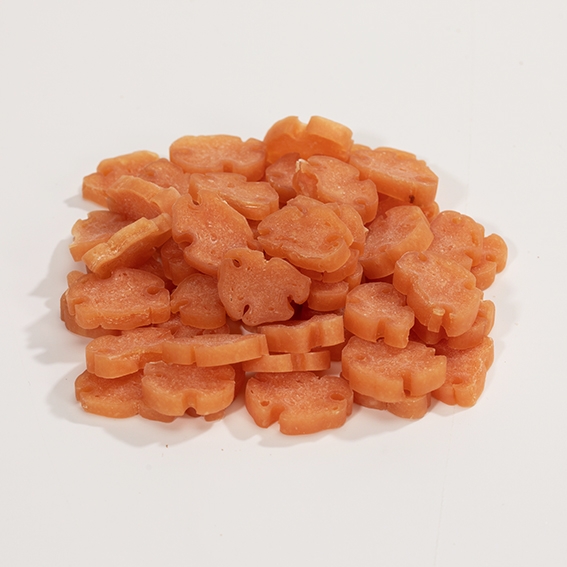
Modern pet owners are becoming label detectives, and rightfully so. The ingredient list on a bag of air-dried food is usually refreshing in its brevity and clarity.
To manufacture extruded kibble, starch is functionally necessary. You need a binder—like corn, wheat, soy, potato, or legumes—to make the dough stick together and form a pellet. Without these high-glycemic carbohydrates, the kibble would crumble. Air-drying does not require such binders. The meat binds to itself as it dries.
This absence of fillers makes air-dried food generally hypoallergenic and ideal for dogs with grain sensitivities or chronic yeast issues. Yeast thrives on sugar, and simple carbohydrates from starchy fillers break down into sugar in the body. By removing the starch, you starve the yeast, often clearing up itchy skin and ear infections.
Transparency extends to the meat itself. You will rarely see generic "Meat Meal" or "Poultry By-Product" on these labels. Instead, you see specific, named cuts: "Beef Heart," "Lamb Liver," "Venison Lung." This precision allows owners to practice single-protein sourcing effortlessly. If you suspect your dog has a chicken allergy, finding a beef-only air-dried option that doesn't sneak in "chicken fat" is much easier than in the kibble aisle.
There is also a reassurance that comes from visual inspection. Kibble is a uniform brown pellet; you cannot see what went into it. Air-dried food often looks like dried slices of meat. You can sometimes see flecks of bone or the texture of the muscle fiber. This visual confirmation provides a layer of trust that highly processed brown balls cannot offer.
We must address the elephant in the room: the price tag. A small bag of air-dried food often costs as much as a large bag of premium kibble. This "sticker shock" turns many owners away before they understand the math behind the price.
To understand the value, you must look at the "Scoop Logic." Traditional pet food is often packed with fillers and moisture. When you buy air-dried food, you are paying for concentrated nutrition. The removal of water and the absence of bulky fillers means the caloric density is incredibly high. Consequently, the serving size is small.
One cup of air-dried food can contain the nutritional equivalent of three cups of standard kibble. Therefore, you feed significantly less volume per meal. When you calculate the cost per day rather than the cost per bag, the price gap narrows considerably. The bag lasts much longer than you expect.
The return on investment (ROI) is also visible in your backyard. Because the food is highly digestible (90%+), the dog's body absorbs almost everything. The result is significantly less waste output. Stools become much smaller, firmer, and less frequent. Large, voluminous stools are a sign that you paid for food your dog simply excreted. With air-dried diets, your money is being spent on nutrition that is actually absorbed into the body.
If a 100% air-dried diet is outside your budget, there are strategic ways to incorporate it:
Full Diet: Ideal for small breeds (Toy Poodles, Chihuahuas) where the daily volume is low, making the cost manageable.
50/50 Mix: Feed half air-dried and half high-quality kibble. This balances cost while significantly upgrading the overall nutritional intake.
Toppers: Use it as a nutrient booster. Even replacing 10% of the diet with fresh, air-dried nutrients can provide health benefits for a minimal daily cost.
As the popularity of this category grows, so does the number of low-quality imitations. Not all dried meat products are created equal, and it is crucial to spot the difference between a complete diet and a glorified snack.
Be wary of products that look like air-dried food but are actually Wrapped Pet Treats or low-grade jerky. These are often manufactured in unregulated facilities and may use glycerin as a humectant to keep the meat soft. Glycerin is a sugar alcohol that you generally want to avoid in a staple diet. Furthermore, ensure that salt and sugar are not listed as primary preservatives. While a tiny amount of salt is necessary for life, it should not be used heavily to cure the meat.
Use this simple checklist before purchasing:
AAFCO Compliance: This is non-negotiable for a main meal. The package must state it is "Complete and Balanced" for your dog’s specific life stage. Be careful with puppies; ensure the food meets the growth profile, as they require precise Calcium/Phosphorus ratios that general "adult maintenance" foods may lack.
Sourcing: Look for verifiable sourcing from countries with strict animal welfare and food safety standards, such as New Zealand, the USA, or Canada. New Zealand, in particular, is famous for its grass-fed, free-range livestock used in air-dried pet foods.
Moisture Max: Check the guaranteed analysis. Moisture content should be listed near 10-14%. If it is too high, it might require mold inhibitors. If it is too low (like freeze-dried), it loses that desirable jerky texture.
Air-dried dog food successfully bridges the gap between the biological benefits of raw feeding and the modern need for convenience. It offers a powerful combination of safety, nutrient density, and palatability that few other formats can match. While the upfront cost is undeniably higher, the health dividends—seen in improved digestion, shinier coats, and better energy levels—often justify the expense. Additionally, the lower feeding volumes mean the actual daily cost is more reasonable than the price on the shelf suggests.
If you are hesitant to commit to a full diet switch, start small. Purchase a small bag to use as a high-value topper. This allows you to test your dog's enthusiasm and observe their digestive transition without a massive financial commitment. Most owners find that once their dogs get a taste of the real thing, going back to plain kibble is not an option.
A: Nutritionally, they are very similar, as both preserve raw nutrients well. The main difference is texture and convenience. Air-dried food has a firm, jerky-like texture that many dogs prefer for chewing, and it is ready to eat right out of the bag. Freeze-dried food is porous and crumbly, often requiring rehydration with water to be palatable. If you want "scoop and serve" convenience with a meatier texture, air-dried is generally the better choice.
A: No, you do not. Unlike freeze-dried or dehydrated foods, air-dried food is designed to be eaten as-is. It retains enough internal moisture (usually around 14%) to be palatable and digestible without rehydration. However, you should always ensure your dog has access to a bowl of fresh water separately, as air-dried food is much drier than canned or fresh food.
A: Yes, it can if you overfeed. Air-dried food is extremely calorie-dense because it lacks water and fillers. A bowl of air-dried food looks much smaller than a bowl of kibble, leading owners to accidentally "feel bad" and add more. It is critical to strictly follow the feeding guidelines on the package and measure portions to prevent obesity.
A: It is safe only if the package specifically states it meets AAFCO nutrient profiles for "Growth" or "All Life Stages." Puppies, especially large breeds, need precise mineral balances for bone development. If a package says "Adult Maintenance," it is not suitable for a growing puppy. Always verify the life stage claim before feeding it to young dogs.
A: Typically, air-dried food lasts about 8 weeks after opening if the bag is sealed properly. It does not require refrigeration. You should store it in a cool, dry place and press the air out of the bag before resealing to maintain freshness. Unopened, it can last for many months, making it excellent for emergency supplies.


