Welcome to Grand China Lucas! | may.zhang@gclpet.com
- All
- Product Name
- Product Keyword
- Product Model
- Product Summary
- Product Description
- Multi Field Search

Views: 0 Author: Site Editor Publish Time: 2026-09-16 Origin: Site


The increasing trend of pet-inclusive trick-or-treating and community Halloween events creates a specific logistical challenge for homeowners and event organizers. You want to safely accommodate visiting dogs while building neighborhood goodwill. Handing out loose, bulk-bought dog treats presents significant hygiene risks. It also introduces cross-contamination issues with toxic human candies like chocolate or xylitol. Protective pet owners carry justifiable skepticism regarding ingredient safety and tampering when handed an unsealed item. Establishing trust with pet parents requires a shift in your giveaway strategy. This guide evaluates why commercially sealed, individually wrapped dog treats are the most viable, liability-reducing solution for public Halloween distribution. We provide a framework for selecting the right options based on safety, hygiene, and canine appeal.
Safety and Trust First: Commercially sealed packaging provides tamper evidence and clear ingredient lists, which are mandatory for gaining the trust of cautious pet parents during Halloween.
Allergen Management: Opting for limited-ingredient or single-protein options minimizes the risk of triggering unknown food allergies in visiting neighborhood dogs.
Cost vs. Scalability: While DIY treat bagging seems cost-effective, the labor, hygiene risks, and lack of verifiable expiration dates make commercial individually wrapped dog treats for giveaways the superior choice for high-traffic neighborhoods.
Risk Mitigation: Strict physical separation between human candy bowls and dog treat stations is a non-negotiable operational requirement to prevent accidental ingestion of toxic substances.
Halloween night introduces a chaotic environment filled with unpredictable variables. When homeowners attempt to include neighborhood dogs in the festivities, the default approach is often a large, open bowl of loose dog biscuits. This method immediately introduces severe hygiene and liability concerns. Reaching into a shared bulk bag of dog treats after handling human candy, touching doorbells, and adjusting costumes transfers bacteria directly onto the treats. Handing out unverified food items to strangers' pets carries implicit liability. Pet owners are highly protective. A loose treat offers no proof of its origin, ingredients, or expiration date.
Gaining pet parent trust relies entirely on visible success criteria. Factory seals, clear branding, and printed expiration dates on individual wrappers act as immediate trust signals. When an owner sees a sealed package, it reassures them the treat is safe, untampered with, and specifically formulated for dogs. This level of transparency is impossible to achieve with loose biscuits or homemade items handed out in standard sandwich bags. You cannot expect a stranger to trust your kitchen sanitation standards on a dark porch.
Cross-contamination prevention is another primary driver for adopting sealed packaging. The standard Halloween candy bowl is a hazard zone for canines. It contains chocolate, raisins, macadamia nuts, and xylitol-based candies. All of these are highly toxic to dogs. If a loose dog treat sits in the same bowl or is handled by the same hands that just unwrapped a chocolate bar, trace amounts of toxins can transfer. Individual wrappers provide a necessary structural barrier. They ensure that even if a dog treat accidentally falls into a child's candy bucket, the treat remains uncontaminated and safe for the dog to consume later.
Consider the physical mechanics of a busy porch on October 31st. You have kids grabbing handfuls of candy, dropping pieces, and mixing items. A loose dog biscuit absorbs moisture from the air and picks up residue from the bowl. A sealed wrapper prevents this entirely. It keeps the treat dry, sterile, and intact. When you hand a sealed package to a dog owner, you eliminate the guesswork and protect yourself from accusations if the dog experiences stomach issues later that night.
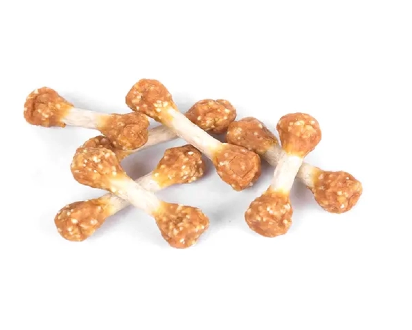
Selecting the right treats for a public giveaway requires analyzing multiple dimensions of safety, packaging, and canine health. You cannot simply buy the cheapest bulk box available. You must evaluate the treats based on how they will be handled, read, and consumed by unknown dogs in low-light conditions.
You must select treats with easily readable ingredient lists printed directly on the primary packaging. When a pet owner receives a treat, their first action is often scanning the back of the wrapper. If the ingredients are only listed on the master carton you threw away, the owner will likely discard the treat. Understanding common canine allergens is also necessary. Beef, dairy, and wheat are frequent triggers for canine food allergies. Choosing limited-ingredient recipes or single-protein options provides a strategic advantage. It minimizes the risk of triggering an unknown allergy and increases the likelihood the owner will allow their dog to eat it. Look for treats that highlight a single meat source, like chicken or sweet potato, to keep the ingredient deck short and recognizable.
The physical wrapper must perform under challenging conditions. You must assess wrapper durability based on real-world trick-or-treating scenarios. Can the wrapper withstand being dropped into a bag alongside heavy candy bars, plastic toys, and keychains without puncturing? Foil-lined wrappers generally offer better puncture resistance than thin cellophane. You must also evaluate the ease of opening for the owner versus the tamper-resistance of the factory seal. A wrapper that requires scissors to open is frustrating on a dark sidewalk. However, a seal that pops open too easily fails to provide tamper evidence. A standard heat-sealed edge with a designated tear notch offers the best balance of security and accessibility.
Managing a Halloween giveaway requires balancing volume with quality. Analyzing bulk purchasing options helps maximize your budget. Standard 16-count bags might work for a quiet cul-de-sac, but 12-ounce value-priced multi-packs are necessary for busy streets. For high-density neighborhoods, buying two-pack bundles lowers the cost-per-unit significantly. This approach allows you to distribute high-quality, safe treats without exhausting your resources in the first hour of the night. Always calculate your expected foot traffic before purchasing. Buying in larger master cases often yields better unit economics while ensuring you do not run out during peak hours.
Choosing a "one-size-fits-most" treat is a specific logistical challenge. Large chews present severe choking hazards for small breeds like Chihuahuas or Pomeranians. Conversely, micro-treats might be swallowed whole by large breeds like Mastiffs or Great Danes, completely negating the chewing experience and potentially causing gagging. A medium-sized, breakable treat is usually the safest middle ground. Additionally, consider caloric density. Dogs walking miles around a neighborhood on Halloween night can easily experience stomach upset if fed highly rich, calorie-dense treats. Moderate caloric density ensures the dog enjoys the reward without gastrointestinal distress later that evening.
Once you understand the evaluation criteria, you must choose the specific type of treat to distribute. Different formulations offer distinct advantages and drawbacks for public giveaways. You need to match the treat type to your expected neighborhood demographics.
Baked biscuits are a traditional favorite for a reason. Providing crunchy chicken biscuit dog treats offers high structural integrity. They will not crumble easily when shoved into a pocket or the bottom of a trick-or-treat bag. They feature a universally appealing flavor profile that most dogs accept readily. Their low moisture content equates to a much longer shelf life, meaning leftovers can be saved for next year. However, they do have drawbacks. Many commercial biscuits contain wheat or grains, which some owners avoid. They can also be too hard for senior dogs with dental issues to chew comfortably.
Soft, chewy options are excellent for quick rewards. Utilizing single-serve dog training treats provides a low-calorie option suitable for all life stages, from puppies to seniors. They are highly aromatic, which grabs a distracted dog's attention quickly amid the chaos of Halloween costumes and noises. The downside is their packaging and perishability. They are often packaged in thin, tear-away pouches that can be easily crushed in a crowded bag. Their higher moisture content also requires strict adherence to expiration dates, as they are more prone to molding if the seal is compromised.
Novelty treats lean heavily into the holiday spirit. They offer high aesthetic appeal and look fantastic on a giveaway table. Opting for standard treats housed in festive outer packaging, such as jack-o-lantern or witch's brew wrapper designs, provides the Halloween feel without compromising the treat itself. However, novelty shapes sometimes prioritize appearance over ingredient quality. They often carry premium pricing simply for the seasonal shape. If the treat itself is dyed orange or black, it requires strict evaluation of artificial dyes, which many pet parents strictly avoid.
Treat Category | Durability in Bags | Allergen Risk | Shelf Life |
|---|---|---|---|
Crunchy Biscuits | High (Resists crushing) | Moderate (Often contains wheat) | 12-24 Months |
Soft Training Treats | Low (Can be squished) | Low (Often single-protein) | 6-12 Months |
Novelty/Themed Treats | Moderate | High (Artificial dyes common) | Varies by formulation |
Many well-meaning homeowners consider baking their own dog treats for Halloween. While the intention is good, the execution in a public setting introduces massive risks. You must weigh the reality of distributing homemade food to unknown animals.
DIY recipes utilizing generally safe ingredients like homemade pumpkin, whole wheat flour, and xylitol-free peanut butter are incredibly popular online. However, you must contrast commercially sealed treats with highly perishable, messy DIY trends. Items like doggy cake pops, gummy treats, or banana yogurt pops melt quickly, spoil at room temperature, and create sticky messes inside trick-or-treat bags. A melted yogurt drop ruins the human candy sitting next to it.
The severe limitations of DIY become apparent when handing them to strangers. A homemade treat lacks ingredient labeling. The pet owner has no idea what is inside it. They have no guarantee regarding your kitchen sanitation. Most importantly, you have an inability to definitively prove to a cautious owner that the peanut butter you used was actually xylitol-free. Xylitol is a common artificial sweetener in peanut butter that is highly toxic to dogs. A stranger will not, and should not, take your word for it. Commercial options eliminate this friction entirely.
Time is a finite resource during holiday preparations. Compare the time investment of baking, cooling, and individually bagging 100 or more DIY treats in Ziploc bags versus simply opening a box of commercial multipacks. The labor involved in DIY is substantial. You spend hours managing oven temperatures and sealing plastic bags.
When analyzing the cost-per-unit trade-offs, commercial multipacks offer distinct economies of scale. While a box of individually wrapped dog treats for giveaways might have a higher initial purchase price than a bag of flour and a can of pumpkin, it carries zero labor costs. You do not spend hours in the kitchen, you do not buy individual plastic baggies, and you do not risk a batch burning. For high-traffic neighborhoods, commercial treats are the only scalable option.
Feature | DIY Treat Bagging | Commercial Individually Wrapped |
|---|---|---|
Ingredient Transparency | None (Verbal confirmation only) | High (Printed on every wrapper) |
Tamper Evidence | None (Standard Ziploc bags) | High (Factory heat seals) |
Labor Required | High (Baking, cooling, bagging) | Zero (Ready to distribute) |
Cross-Contamination Risk | High (Kitchen prep surfaces) | Low (Factory controlled) |
Shelf Life | Days (Highly perishable) | Months to Years |
Purchasing the right treats is only half the process. Distributing them safely requires a structured operational approach on Halloween night. You need a system that handles high foot traffic without creating bottlenecks or safety hazards.
You must calculate treat volume based on your specific location to ensure adequate supply. Dense city apartment buildings often see highly concentrated bursts of trick-or-treaters, including many small apartment dogs. Sprawling suburban neighborhoods might see a steady stream of larger family dogs over several hours. Review your human candy distribution from the previous year. A safe baseline is assuming one dog will accompany every five groups of children. Purchase enough multipacks to cover this estimate, keeping in mind that sealed treats will not expire if you have leftovers.
Mixing human candy and dog treats on the same table is a critical error. You must outline the necessity of using distinctly different bowls and tables for human candy and dog treats. This physical separation eliminates accidental mix-ups by children grabbing handfuls in the dark or distracted adults handing out the wrong item. Place the dog treats on a separate small table or hold them in a distinct, differently colored container. Keep the dog treat station at least three feet away from the human candy bowl to prevent any accidental dropping of chocolate into the dog supply.
Never hand a treat directly to a dog or toss it on the ground. Homeowners must always ask the owner's permission before offering a treat. Use a simple script: "I have sealed, peanut-free dog treats. May I offer one to your pup?" This verifies dietary restrictions and prevents issues with behavioral triggers like resource guarding. Hand the wrapped treat to the owner, not the dog, allowing the owner to control the unwrapping and feeding process. This simple step prevents accidental bites and respects the owner's training boundaries.
Proactive communication prevents confusion. Recommend using clear, illuminated signage near your distribution point. A simple sign reading "Dog Treats Here - Peanut Free & Sealed" communicates safety immediately to approaching trick-or-treaters. It saves time, answers the owner's primary questions before they even ask, and establishes your house as a safe, pet-friendly stop. You can use a small chalkboard or a printed sign placed in a visible, well-lit area on your porch. Ensure the lighting is bright enough for owners to read the ingredient labels on the wrappers.
Calculate your expected canine foot traffic by reviewing last year's human trick-or-treater volume and assuming one dog per five groups.
Verify the ingredient lists of your selected commercial multipacks to ensure they are free from common allergens like wheat, dairy, and artificial dyes.
Order value-sized boxes of sealed treats by early October to secure inventory before seasonal stock shortages occur.
Set up a dedicated, physically separate distribution station for pets at least three feet away from all human candy bowls.
Create a clear, illuminated sign for your porch that explicitly states your treats are factory-sealed and safe for dogs.
A: Yes. Individually wrapped treats provide a physical barrier against cross-contamination from toxic human candies like chocolate and xylitol. They feature factory seals and printed ingredient lists, proving to cautious pet owners that the treat is untampered with and safe for canine consumption.
A: The safest options are limited-ingredient or single-protein treats. Look for wrappers clearly stating the treats are free from common allergens like wheat, corn, soy, and dairy. Always hand the wrapped treat to the owner so they can read the ingredient list themselves.
A: Estimate that one dog will accompany every five to seven groups of trick-or-treaters. If you typically see 100 children, plan for 15 to 20 dogs. Buying commercially sealed multipacks ensures any leftover treats remain fresh for months.
A: No. You must maintain strict physical separation. Placing dog treats in the same bowl as human candy risks cross-contamination from melting chocolate or toxic wrappers. It also increases the risk of a child accidentally grabbing and eating a dog treat.
A: Homemade treats lack ingredient labels and tamper evidence. Strangers cannot verify your kitchen sanitation or guarantee that ingredients like peanut butter were free of deadly toxins like xylitol. Homemade treats are also highly perishable and create messes in bags.
A: Commercially sealed dog treats typically last between 12 and 24 months, depending on their moisture content. Crunchy biscuits last longer than soft training treats. Always check the expiration date printed on the individual wrapper or the master carton before distributing them.
A: A medium-sized, easily breakable treat is the safest option. Large, hard chews present a choking hazard for small breeds, while tiny micro-treats can be swallowed whole by large breeds, potentially causing gagging. Breakable treats allow the owner to portion it appropriately.


