Welcome to Grand China Lucas! | may.zhang@gclpet.com
English
- All
- Product Name
- Product Keyword
- Product Model
- Product Summary
- Product Description
- Multi Field Search

Views: 0 Author: Site Editor Publish Time: 2025-10-28 Origin: Site


Wondering how much wet food to feed a dog? A common starting point is about 1 can for every 15 pounds of adult body weight each day. You need to adjust this amount based on your dog's age, size, and how active they are. For example, puppies have higher energy needs and need more frequent meals, while senior dogs often require fewer calories. Here’s a quick look at daily wet dog food portions:
Dog Age/Type | Weight (lbs) | Wet Food Amount (trays) |
|---|---|---|
Puppies (under 4 months) | 5 | 3 ½ trays |
Adult Dogs | 25 | 9 ½ trays |
Senior Dogs | 10 | N/A |
You should always check with your veterinarian to make sure you feed a dog the right amount.
Give about 1 can of wet food for every 15 pounds your dog weighs each day. Change the amount if your dog is older, bigger, or more active.
Puppies eat more often. Older dogs need smaller meals. Watch your dog's body shape to change how much food you give.
Look at pet food labels for feeding rules. Ask your vet for advice that fits your dog.
Mixing wet and dry food can help with nutrition and taste. Change the amounts so you do not feed too much and keep meals balanced.
Keep your dog's eating spot clean. Make sure your dog has fresh water every day for good health.
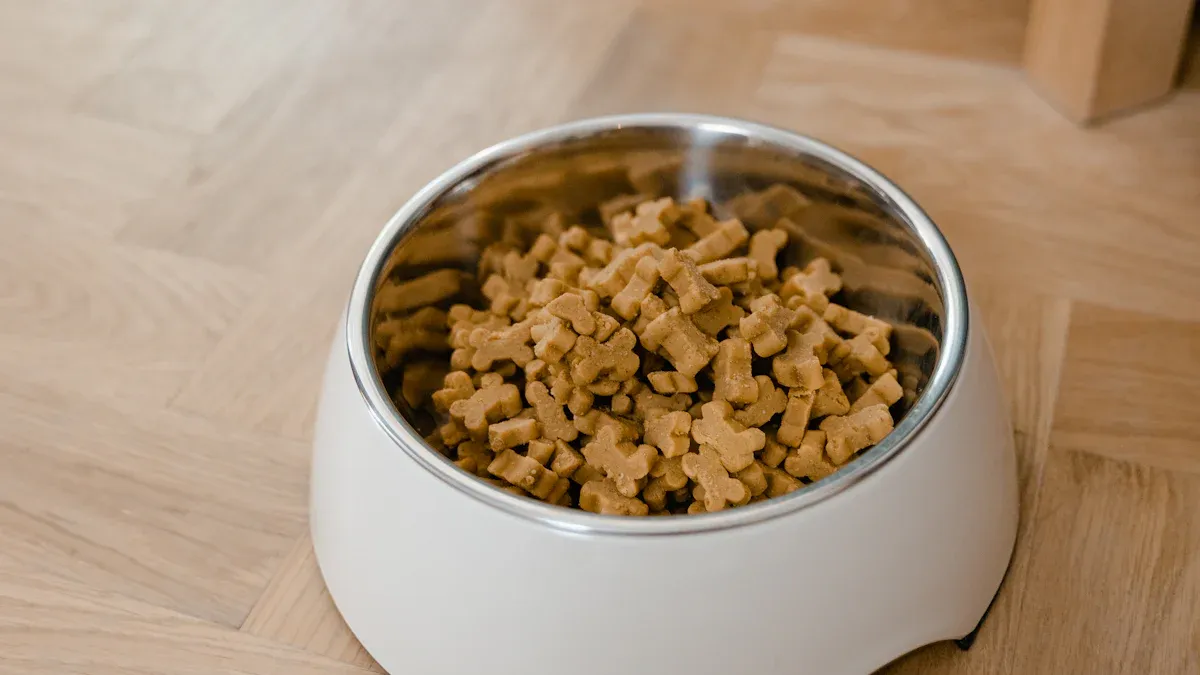
You probably wonder how much wet food your dog needs each day. The answer depends on your dog's size. Most pet food brands offer clear feeding guidelines on their packaging, but you can use this table as a quick reference for daily portions:
Dog Weight (lbs) | Daily Portion (cans) | Serving Size (cans) |
|---|---|---|
7 | 1/2 | 1/4 |
30 | 2 | 1 |
60 | 4 | 2 |
90 | 6 | 3 |
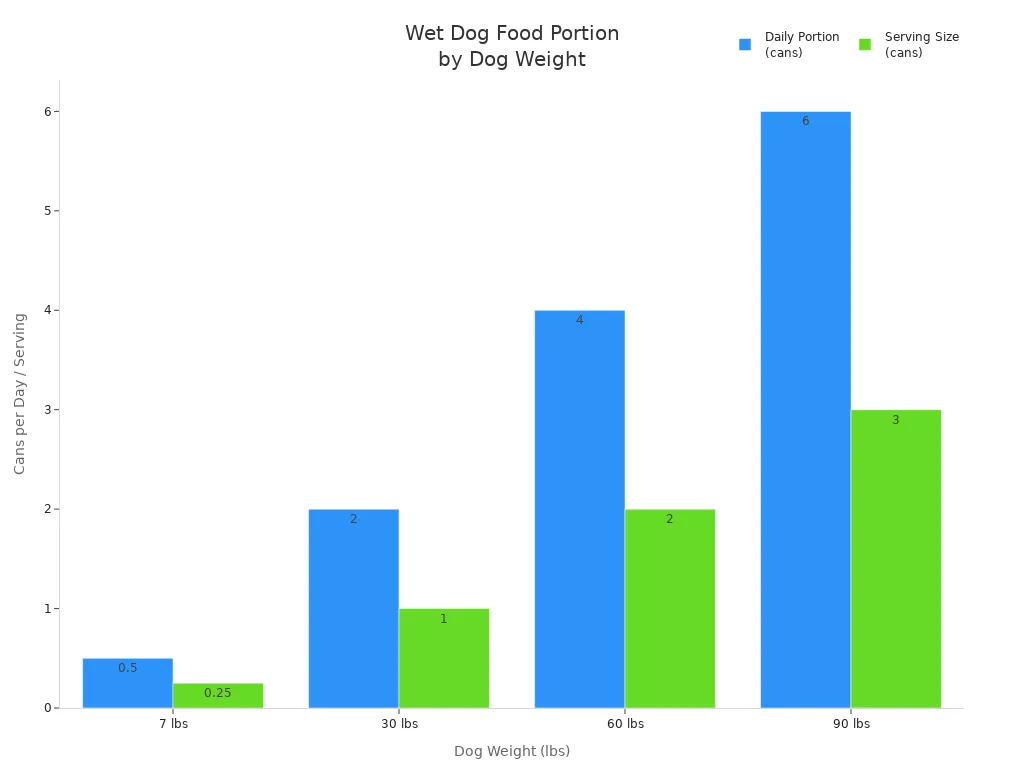
If you have a small dog, you might feed about half a can per day. Medium dogs usually need two cans. Large breeds can eat up to six cans daily. Always check the label for the recommended dog food amount, since recipes and calorie counts can vary.
Dogs need different amounts of wet dog food at different life stages. Puppies, adults, and seniors all have unique needs. Here are some general feeding guidelines for each group:
Puppies grow fast and burn lots of energy. You should feed them nutrient-rich wet dog food in three or four small meals every day.
Adult dogs need balanced nutrition. You can adjust how much wet food you give based on their weight and activity level. Most adults do well with two meals a day.
Senior dogs slow down as they age. They often need less food to avoid gaining weight. Smaller portions help support their joints and keep them healthy.
You might notice your puppy wants to eat more often. That is normal. Seniors may not finish their bowl, so you can reduce the portion size. If you are unsure, you can use the general feeding guidelines from the manufacturer or ask your vet.
Tip: Puppies need more frequent meals, while seniors do better with smaller portions. Watch your dog's body condition and adjust how much wet food you serve.
You want your dog to get the best nutrition. Following feeding guidelines from trusted brands helps you provide a complete and balanced diet. Here are some reasons to pay attention to the label and talk to your vet:
Pet food labels show you how much wet food to feed for your dog's weight and age.
Feeding guidelines can differ between brands, so always check the packaging.
Not all recommended amounts guarantee balanced nutrition. You should verify the portion with the manufacturer if you have questions.
Your veterinarian can answer questions about how much wet food your dog needs. They can help you choose the right type and amount for your dog's lifestyle.
Regular checkups with your vet help you keep your dog's diet on track.
If you follow these steps, you can feel confident about your dog's meals. You will know you are giving them the right amount of wet dog food for their needs.
Your dog's weight and body shape help you decide how much wet food to give. Dogs at a healthy weight need different amounts than dogs who are overweight. This table shows how body condition scores can help you choose:
Body Condition Score (BCS) | Description |
|---|---|
4-5 | Ideal weight |
8-9 | Obesity (over 30% ideal weight) |
Many owners find it hard to judge their dog's body condition. Some people think their dog weighs less than it does. This can cause them to feed too much. You can check your dog's body condition in these ways:
Feel your dog's ribs. You should feel them easily.
Look at your dog's waist from above. It should show.
Check for a tuck-up behind the ribs from the side.
Reading wet dog food labels and learning about your dog's body can help you avoid feeding mistakes.
Your dog's daily habits change how much wet food they need. Dogs who run and play use more energy than dogs who rest a lot. This table shows how activity level affects calorie needs:
Activity Level | Description | Caloric Needs |
|---|---|---|
Low Activity | Limited exercise | Lower caloric needs to maintain a healthy weight |
Medium Activity | Regular walks and playtime | Balanced caloric needs for moderate energy |
High Activity | Strenuous activities or working dogs | Higher caloric intake to support energy requirements |
Active dogs need more food. Dogs who rest need less. Changing food amounts based on activity helps keep your dog's weight healthy. Dogs who run fast need more carbohydrates for quick energy. Dogs who walk or hike need more fat for lasting energy.
Some dogs need special diets because of allergies or health problems like diabetes. If your dog has allergies, you may need a hypoallergenic wet dog food or a limited ingredient recipe. Diabetic dogs need extra care with their food. This table shows which nutrients matter most for diabetic dogs:
Nutrient Type | Importance for Diabetic Dogs |
|---|---|
Starch | Should be low to prevent spikes in blood glucose levels |
Protein | High protein helps maintain muscle mass |
Fiber | Slows digestion and glucose absorption |
If your dog has diabetes, feed them at the same time every day. Do not give snacks between meals. This helps keep their blood sugar steady. Always ask your vet before changing your dog's food, especially if they have health problems.
Tip: If you do not know how much wet food to give your dog, think about their weight, activity, and health. Your vet can help you make a feeding plan that fits your dog's needs.
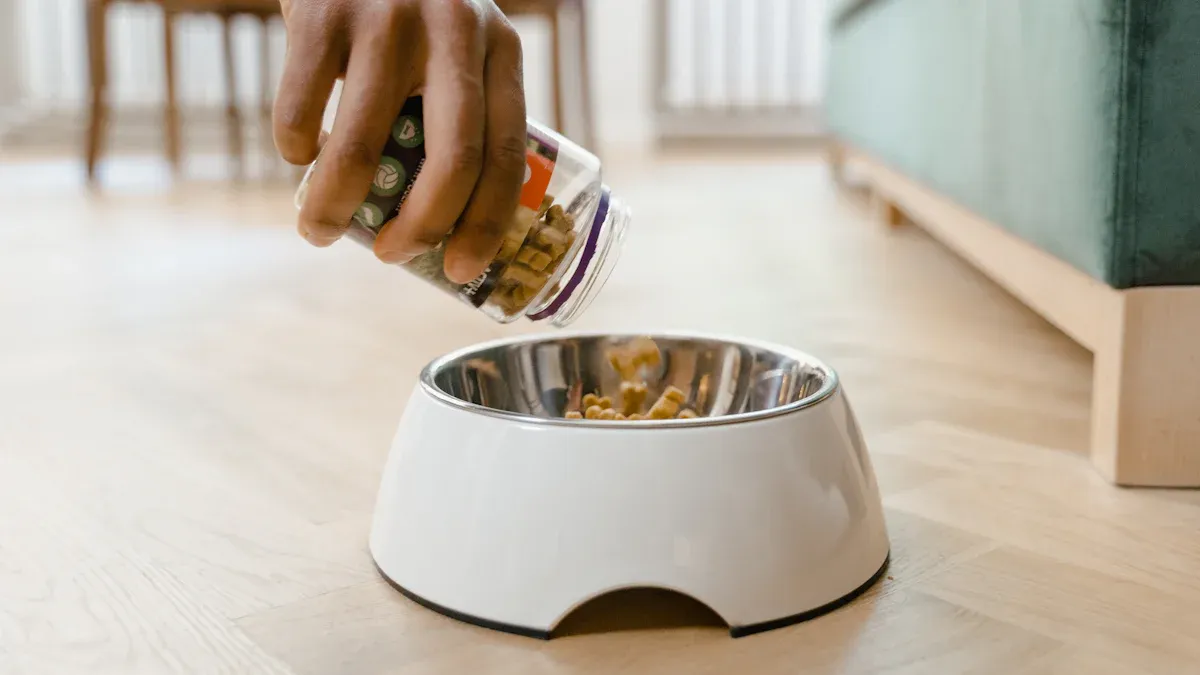
You might want to mix wet dog food with dry kibble to give your pup more variety. This can help picky eaters and add moisture to their meals. To get the right portion size, you need to adjust both types of food. If you add wet food, subtract some kibble so your dog does not eat too many calories. Dry food is more concentrated, so you should use a smaller amount compared to wet food.
The amount of dry food is not equal to the same volume of wet food. To provide the same amount of energy and nutrients, give your dog a 3.5 times smaller portion than with wet food.
Here are some best practices for mixing wet and dry food:
Start by introducing a small amount of wet food into your dog's usual kibble.
Adjust the ratio based on your dog's taste and texture preference.
Use the same brand for both wet and dry food if possible. This keeps nutrition balanced.
Store wet food in the fridge after opening to keep it fresh.
Watch your dog's weight and health. Make changes if you notice any problems.
Ask your vet if you have questions about mixing foods.
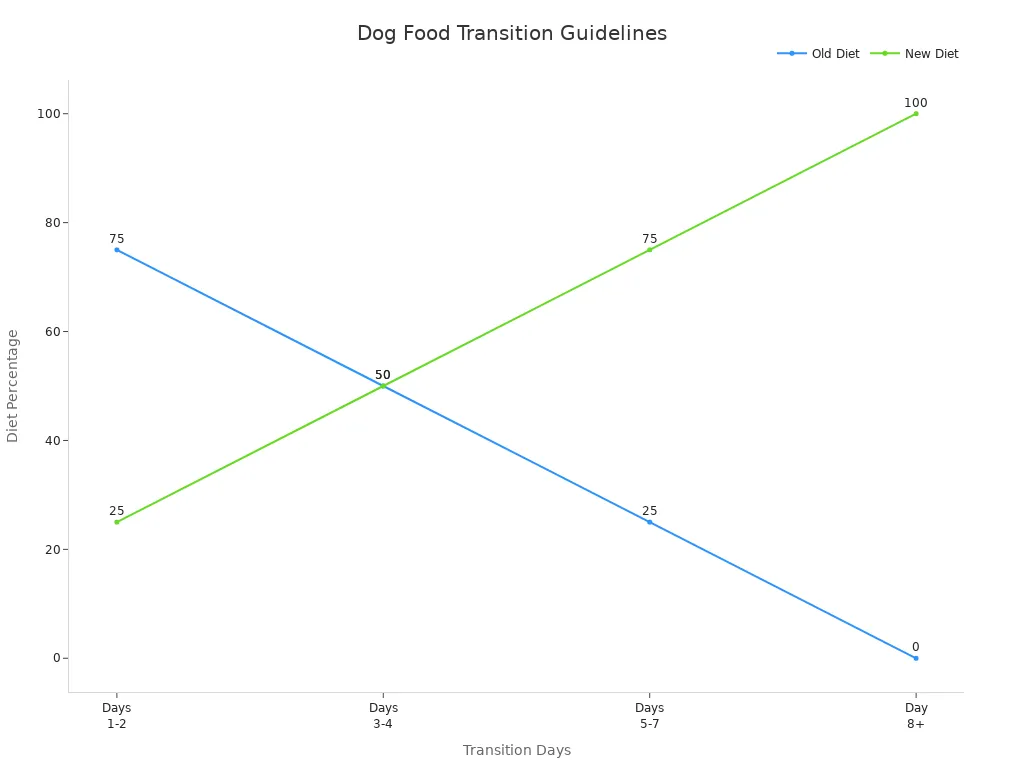
Switching your dog from dry to wet food or vice versa takes time. You want to avoid stomach upset. Follow this table to make the change slowly:
Days | Old Diet Percentage | New Diet Percentage |
|---|---|---|
Days 1-2 | 75% | 25% |
Days 3-4 | 50% | 50% |
Days 5-7 | 25% | 75% |
Day 8+ | 0% | 100% |
Measuring food accurately helps you keep your dog healthy. You can use an electronic gram scale for the best results. If you do not have one, a dry-food measuring cup works for larger amounts. Try to measure the whole day's food at once to avoid mistakes.
Tip: Always check your dog's bowl after meals. If there is leftover food, you may need to adjust the portion next time.
Mixing wet and dry food can be easy if you follow these steps. You will help your dog enjoy mealtime and stay healthy.
How do you pick the best wet dog food for your pup? You want to look for brands that focus on digestibility, ingredient sourcing, and strict quality control. At Grand China Lucas, we use human consumption standard processing and advanced automated equipment to make sure every batch meets high standards. Our wet dog food comes from carefully selected ingredients and goes through rigorous safety checks. You can check your dog's digestion by watching their stool consistency and appearance. If you see firm, regular stools, your dog is likely getting quality nutrition.
Here are some things to look for when you choose a wet dog food:
Nutritional adequacy for your dog's age and size
Transparent ingredient sourcing
Strong quality control measures
Easy digestibility
Many pet owners trust Grand China Lucas because we have over 20 years of experience and certifications like HACCP and FDA registration. One customer said, "My dog loves the taste and always finishes his bowl. His coat looks shinier and he has more energy!"
Want to give your dog the best? Try Grand China Lucas wet dog food and see the difference in your dog's health and happiness.
How many times a day should you feed a dog? Most adult dogs do well with two meals a day, while puppies may need three or four. Keeping a regular schedule helps your dog feel secure and supports stable digestion. Predictable mealtimes can reduce stress and keep your dog's energy balanced.
To monitor your dog's health, check their weight and body condition often. You can weigh your dog at home or at the vet's office. Watch for changes in their appetite, energy, and stool. If you notice weight gain or loss, adjust the portion size. Regular observation helps you fine-tune their diet and keep them healthy.
Tip for Monitoring | What to Do |
|---|---|
Weigh your dog | Use a scale monthly |
Check body shape | Look for a visible waist |
Watch behavior | Note changes in energy |
Your dog needs fresh water every day. Place a clean bowl of water next to their food and refill it often. When you serve wet dog food, store any leftovers in the fridge at 35–40°F. Use a tight-sealing cover to keep food fresh and safe. Throw away opened cans after three or four days. Always check for signs of spoilage like bad smells or changes in color.
Clean bowls and can covers after each use
Discard food if you notice odor or texture changes
Keep feeding areas tidy to prevent contamination
Keeping your dog's food and water fresh helps prevent illness and keeps mealtime safe.
If you want to learn more about Grand China Lucas wet dog food, visit our website for product details and customer reviews. Your dog's health starts with the right food and smart feeding habits.
You want your dog to be healthy and happy. It is important to give the right amount of wet food. You should change how much you feed based on your dog's age, weight, and how active they are. Watch your dog's weight and body shape to stop them from getting too heavy. Do not forget about how many calories are in the food. Always check your dog's health often.
Your vet can help you pick the best food for your dog. Good brands follow strict rules for feeding amounts. This helps you trust their advice. Look at this table for quick tips:
Factor | What to Do |
|---|---|
Age | Match portions to life stage |
Activity Level | Change food for energy needs |
Health Status | Ask your vet for special diets |
It can take a while to find the right amount. Be patient and keep checking your dog's health. You will figure it out!
You should check your dog's weight and body shape every week. If your dog looks healthy and has energy, you are likely feeding the right amount. Ask your vet if you notice changes.
Yes, you can mix wet and dry food daily. Just adjust the portions so your dog does not eat too many calories. Mixing can help picky eaters and add moisture to meals.
Try reducing the portion size at the next meal. Dogs sometimes eat less when they are not hungry or feeling unwell. If this happens often, talk to your vet.
Store leftovers in the fridge at 35–40°F. Use a tight-sealing cover. Throw away opened cans after three or four days. Always check for bad smells or changes in color.


