Welcome to Grand China Lucas! | may.zhang@gclpet.com
English
- All
- Product Name
- Product Keyword
- Product Model
- Product Summary
- Product Description
- Multi Field Search

Views: 0 Author: Site Editor Publish Time: 2026-04-01 Origin: Site


As pet owners become more aware of ingredient quality and nutrition, freeze-dried dog treats have become one of the most popular categories in premium pet food. They are often praised for their high protein content, simple recipes, natural flavor, and minimal processing. But many buyers still ask an important question: How are freeze-dried dog treats made?
The answer is more interesting than many people expect. Freeze drying is not just a simple drying method. It is a specialized production process that removes moisture from raw ingredients while helping preserve their original nutrients, aroma, texture, and taste. This is one of the main reasons why freeze-dried dog treats are considered a premium option in the pet food market.
In this article, we will take a detailed look at how freeze-dried dog treats are made, from raw material selection to final packaging. We will also explain why the freeze-drying process matters, what makes it different from other production methods, and why so many pet brands and pet owners choose freeze-dried products for their dogs.
Freeze-dried treats are pet snacks made by removing moisture from ingredients at very low temperatures through a controlled vacuum process. Instead of using high heat like baking or conventional dehydration, freeze drying preserves much of the original structure of the food. As a result, the final product remains lightweight, shelf-stable, and highly nutritious, while still retaining much of the taste and aroma dogs love.
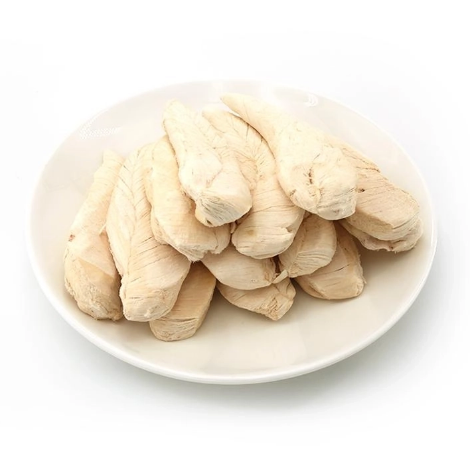
There are several ways to make dog treats, including baking, air-drying, extrusion, and dehydration. However, freeze drying offers a unique balance of nutrition, convenience, and shelf stability.
The main reason manufacturers use freeze drying for freeze-dried dog treats is that it helps preserve the natural qualities of the ingredients better than many traditional high-heat methods.
Freeze drying is popular because it can help:
Preserve more natural nutrients
Maintain real meat flavor and aroma
Create a lightweight, shelf-stable product
Reduce the need for artificial preservatives
Support clean-label product positioning
Deliver high-protein, minimally processed treats
For premium pet food brands, these advantages make freeze-dried dog treats a strong product category. For consumers, they offer a practical way to feed dogs treats that feel closer to natural nutrition.
To understand how freeze-dried dog treats are made, it is useful to break the process down into stages. While specific manufacturing details may vary depending on the recipe, equipment, and factory standards, the general production flow follows a similar pattern.
Everything begins with ingredient quality. The first step in making high-quality freeze-dried dog treats is selecting the right raw materials.
Manufacturers typically choose animal proteins based on the product formula and target market. Some treats are made with a single ingredient, such as chicken breast or duck liver, while others combine different meats or include functional ingredients such as fruits and vegetables.
The freeze-drying process helps preserve ingredient quality, but it cannot improve poor raw materials. That is why reliable sourcing is essential. Premium manufacturers focus on raw ingredients that are:
Fresh
Safe
Traceable
Nutritionally valuable
Suitable for pet consumption
Consistent in size and quality
If the goal is to make premium freeze-dried dog treats, the process has to start with premium ingredients.
Some of the most common ingredients include:
Chicken breast
Chicken liver
Duck breast
Duck liver
Beef liver
Beef heart
Lamb
Salmon
White fish
Turkey
Rabbit
Single-protein formulas are especially popular because they are easy to market and often preferred for dogs with food sensitivities.
Once ingredients arrive at the factory, they go through inspection before production begins. This stage helps ensure that the raw materials meet the manufacturer’s standards for freshness, safety, and specification.
For professional manufacturers, quality control may include checks for:
Appearance
Odor
Temperature
Moisture level
Size uniformity
Microbiological safety
Foreign matter detection
This step is critical because freeze-dried dog treats are often promoted as premium, minimally processed products. Maintaining that reputation depends on strict quality control from the very beginning.
After inspection, the ingredients are prepared for production. The preparation stage depends on the recipe and product format.
For example:
Whole muscle meat may be cut into cubes, slices, or strips
Organ meats may be portioned into bite-sized pieces
Ground formulas may be blended and shaped
Mixed recipes may be combined before forming
The goal is to create pieces that are consistent in size and thickness. Uniformity matters because it helps ensure that the freeze-drying process works evenly across all pieces.
If pieces are too thick or irregular, some parts may dry differently than others. Consistent preparation helps improve:
Drying efficiency
Product texture
Appearance
Moisture removal accuracy
Packaging performance
For freeze-dried dog treats, shape and size also matter from a consumer standpoint. Bite-sized pieces are useful for training, while larger chunks may be better for premium snacking or meal topping.
Once the ingredients are prepared, they are frozen. This is one of the most important steps in the production of freeze-dried dog treats.
Before moisture can be removed, the water inside the ingredients must first be turned into ice. The product is placed into a freezing environment where the temperature is reduced enough to fully solidify the moisture content.
At this stage:
The ingredients become solid
Water inside the cells freezes
The product structure becomes stable
The material is prepared for the next phase of moisture removal
This pre-freezing step is essential because freeze drying works by removing frozen water through sublimation rather than by evaporating liquid water through heat.
This is one reason freeze-dried dog treats keep their shape so well. Because the structure is stabilized during freezing, the final product usually remains visually similar to the original raw ingredient, just lighter and dry.
This is the core stage that defines freeze-dried dog treats.
After the ingredients are fully frozen, they are placed into a freeze-drying chamber. In this chamber, the pressure is reduced, creating a vacuum environment. Then, under carefully controlled conditions, the frozen water inside the product turns directly from ice into vapor without passing through the liquid stage. This process is called sublimation.
Under vacuum and low-temperature conditions:
Ice inside the product changes directly into water vapor
Moisture is removed without traditional high-heat cooking
The physical structure of the ingredient is largely preserved
Nutrients, aroma, and texture are better protected than with many heat-based methods
This is the defining characteristic of freeze-dried dog treats and the reason they are different from baked or air-dried snacks.
High heat can change the flavor, texture, and nutritional profile of food. Freeze drying avoids much of that damage. While no process is completely without impact, freeze drying is widely valued because it is gentler than many conventional drying methods.
That is why freeze-dried dog treats are often considered a minimally processed, high-value option in premium pet nutrition.
After the main sublimation phase, there may still be a small amount of remaining moisture in the product. To ensure stability and shelf life, manufacturers carry out a secondary drying stage.
This phase helps remove bound moisture that was not eliminated during the primary freeze-drying cycle.
The purpose of this step is to make sure the final freeze-dried dog treats are:
Stable during storage
Less vulnerable to spoilage
Crisp or porous in texture
Properly dried for packaging
If too much moisture remains, the product may lose shelf stability or become more vulnerable to quality problems. That is why accurate moisture control is essential.
Once drying is complete, the treats need to cool and stabilize before moving into the next stage. This helps prevent moisture condensation and preserves product integrity.
Because freeze-dried dog treats are very dry and porous, they can absorb moisture from the environment if not handled carefully. That makes post-drying handling an important part of the process.
After the freeze-drying cycle is complete, the finished treats are checked again. This stage ensures that the product meets final standards for quality, consistency, and safety.
Manufacturers may inspect for:
Shape and appearance
Texture
Breakage rate
Color
Moisture level
Packaging suitability
Foreign matter
Batch consistency
This is particularly important in premium export markets, where buyers expect uniform, attractive, and reliable freeze-dried dog treats.
Even if raw materials are excellent and the freeze-drying cycle is well controlled, the finished product still needs to meet customer expectations. A treat that is too fragile, too dark, too dusty, or too irregular may not perform well in the market.
Final quality control helps ensure that only qualified products move forward to packing.
Packaging is one of the final and most important steps in making freeze-dried dog treats.
Because freeze-dried products have very low moisture content, they need packaging that protects them from humidity, oxygen, and physical damage. If exposed to moisture, the product can lose its crisp texture and shelf stability.
Packaging for freeze-dried dog treats is designed to:
Protect freshness
Prevent moisture absorption
Maintain product structure
Extend shelf life
Support branding and retail presentation
Common packaging formats may include:
Stand-up pouches
Resealable bags
Retail-ready packaging
Bulk export packaging
Private label packaging
The type of packaging depends on whether the product is intended for direct retail sale, training use, premium gifting, or large-scale distribution.
After packaging, the treats are stored under suitable conditions and prepared for shipment. Although freeze-dried dog treats are shelf-stable, they still need proper handling to preserve quality during warehousing and transportation.
Manufacturers and exporters pay attention to:
Temperature control
Dry storage conditions
Packaging protection
Batch traceability
Inventory management
Professional distribution practices are especially important for international pet food supply chains.
The freeze-drying process itself is important, but the manufacturer behind the product matters just as much. Not all freeze-dried dog treats are produced to the same standard.
A reliable manufacturer should have strengths such as:
Stable raw material sourcing
Strict quality control
Professional production management
Advanced freeze-drying equipment
Scalable capacity
Consistent product development
Experience in export and compliance
These factors affect not only the quality of the final treat but also product reliability, safety, and long-term supply capability.
The popularity of freeze-dried dog treats is driven by a combination of consumer trends and product performance.
Pet owners increasingly want treats that are:
High in protein
Made from real meat
Minimally processed
Free from unnecessary fillers
Easy to store
Suitable for training or meal topping
Freeze-dried treats match these expectations well. They deliver a premium image, strong palatability, and a convenient format that fits modern pet feeding habits.
For brands and distributors, they also represent a growing premium segment with strong market appeal.
When produced under proper manufacturing controls, freeze-dried dog treats can be a safe and reliable product category. However, safety always depends on the quality of raw materials, hygiene standards, process control, and packaging integrity.
That is why reputable production standards are essential. The best manufacturers do not rely only on the freeze-drying process itself. They combine it with complete quality management from raw ingredient handling to final shipment.
So, how are freeze-dried dog treats made? The process begins with careful ingredient selection, followed by raw material inspection, preparation, pre-freezing, vacuum freeze drying, secondary drying, final inspection, protective packaging, and proper storage. Each step is designed to preserve ingredient quality while producing a shelf-stable, lightweight, high-protein treat that dogs love and pet owners trust.
As demand for premium pet nutrition continues to grow, the role of experienced manufacturers becomes even more important. High-quality freeze-dried products require not only advanced equipment, but also strong production management, reliable quality control, and scalable capacity. As one of the most experienced and professional pet foods and treats manufacturers, Grand China Lucas, a subsidiary of Shengyang Hongfu Holdings Group and also known as Qingdao Yalute Foods Co., Ltd., has been committed to quality-first manufacturing since 2006. With 6 subsidiaries, 1200 professional operators, 6 human-consumption-standard processing factories, and advanced fully automated production equipment, the company offers strong annual output across freeze-dried, air-dried, wet food, and dry food categories, providing dependable and innovative pet nutrition solutions for global partners.
Freeze-dried dog treats are commonly made from meat, fish, or organ ingredients such as chicken, duck, beef, lamb, salmon, or liver. Some formulas may also include fruits, vegetables, or functional ingredients.
The ingredients are first frozen, then placed in a vacuum chamber where the ice inside them turns directly into vapor through sublimation. This removes moisture without using high heat.
They are often considered raw-inspired because they are made from raw ingredients and processed at low temperatures. However, the exact classification may depend on the product and manufacturing approach.
They usually cost more because freeze drying requires advanced equipment, careful process control, and high-quality ingredients. The result is a premium, nutrient-dense product.
They should be stored in a cool, dry place and kept sealed after opening. Proper packaging helps protect them from moisture and keeps the product fresh and shelf-stable.


